LIVES OF THE LIGHT BRIGADE
The E.J. Boys Archive
Added 2.12.2012. Minor edits 15.4.14, 1.1.15. New info added 1.1.16.
IN PROGRESS — NOT FOR PUBLICATION
Captain George CHETWODE — 8th Hussars
Birth & early life
Born on the 20th of July 1823, at Chesterton, Cheshire, the son of the Reverend George Chetwode, and his first wife, Charlotte Anne, the daughter of Martin Walhouse, Esq.
Educated at Eton College.
Reverend George Chetwode M.A. was born in Mucklestone, Staffs [near Market Drayton, Shropshire], and educated at Brasenose College, Oxford (matriculated 1809). At the time of his son's birth he was living in Chilton House, Buckinghamshire, and was Rector of Ashton-under-Lyne, Lancashire, and Perpetual Vicar of Chilton.
[PB: The Revd Chetwode can be found on a number of Poll Books and Electoral registers, e.g. at Stratton Audley, Oxfordshire, in 1830.]
He was married four times.
Reverend George Chetwode
Reverend George Chetwode was born on 1 November 1791. He was the son of Sir John Chetwode, 4th Bt. and Lady Henrietta Grey.
He married, firstly, Charlotte Anne Walhouse, daughter of Morton Walhouse and Anne Craycroft Portal, on 26 August 1818.
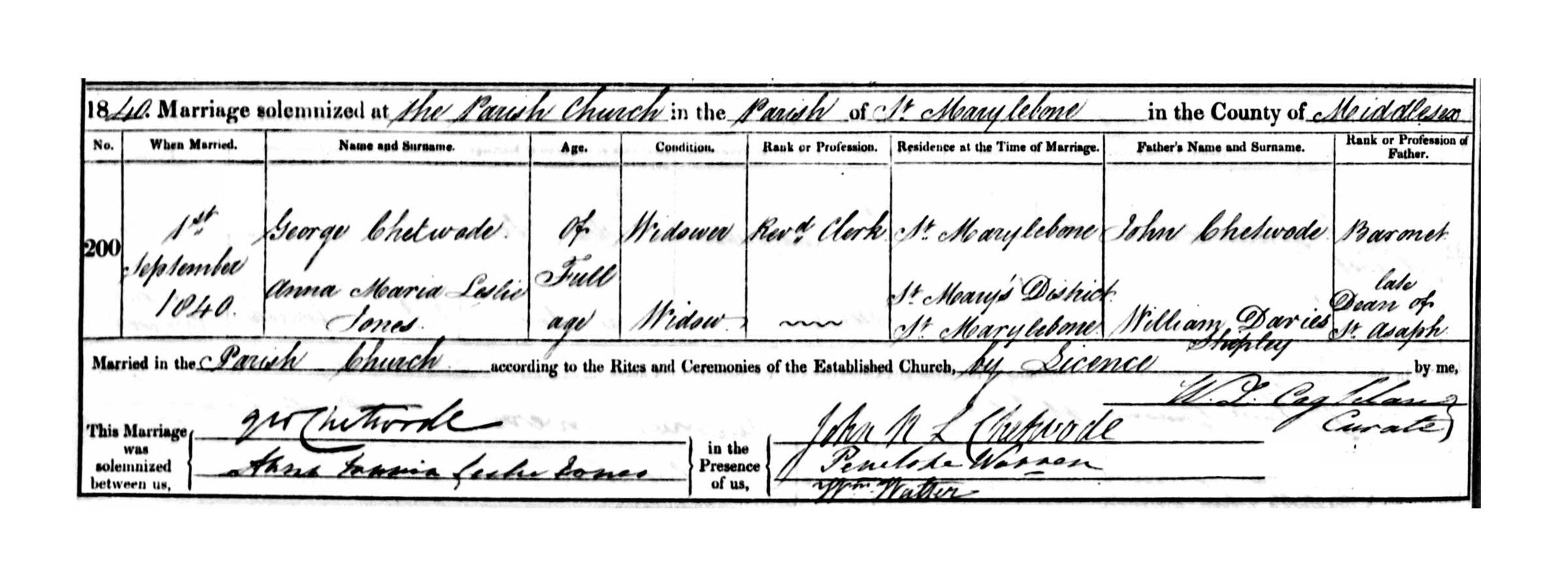
He married, secondly, Anna Maria Shipley, daughter of Rt. Rev. Jonathan Shipley and Anna Maria Mordaunt, on 1 September 1840 [but see note below].
He married, thirdly, Elizabeth Anne Deane on 27 February 1849.
He married, fourthly, Elizabeth Sophia Aubrey, daughter of Thomas Aubrey, on 30 April 1868.
He died on 4 August 1870 at age 78.
Children of Reverend George Chetwode and Charlotte Anne Walhouse.
Emily Hyacinth Anne Chetwode d. 18 Aug 1899.
Hyacinthe Laura Chetwode.
Lt.-Col. Sir George Chetwode, 6th Bt. b. 20 Jul 1823, d. 28 Jun 1905.
[Source: thepeerage.com/p21579.htm#i215785 (accessed 1.1.2016). thepeerage is useful, but not always reliable, e.g. the marriage registry says Chetwode married Anna Maria Leslie Jones, daughter of William Davies Shipley, late Dean of St Asaph, see below] .]
[PB: See the account by Eleanor M Gates of the "Shelleyan Romance" between the radical Leigh Hunt and his benefactor, the wealthy Welsh widow Anna Maria Dashwood (nee Shipley):
In 1840 Anna Maria Dashwood became Revd George Chetwode's second wife (he was her third husband, both previous husbands having been soldiers), and hence our GC's stepmother.
According to Gates, Anna Maria Dashwood's husbands were:
1/ Charles Armand Dashwood, a widower (formerly Lieutenant-Colonel in the Royal Horse Guards Blue), December 30, 1808
2/ Colonel Leslie Grove Jones — a veteran of the Peninsular campaign (in which he served as Lieutenant-Colonel, 1st Regiment, Grenadier Guards),
3/ George Chetwode [father].
At her marriage to George Chetwode snr, she was described as Anna Maria Leslie Jones, daughter of William Davies Shipley, late Dean of St Asaph, see below.
However, she was George Chetwode junior's stepmother only very briefly, since she died within a year, leaving much of her fortune to Chetwode [PB: father or son?] — thus, it would seem, depriving Leigh Hunt of a much-neeeded annuity.
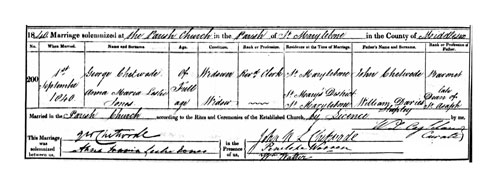
(Click on image to enlarge)
"Leigh Hunt... described Reverend Chetwode as 'an old beau who used to comb his hair with a leaden comb to efface the grey.'...Her third marriage, to the Reverend George Chetwode (1791-1870), perpetual Curate of Chilton, Bucks., another widower, took place at Marylebone September 1, 1840, and was followed by her own death on August 25, 1841, at Chilton — from what cause we do not know. It was Chetwode, who subsequently went on to a third and then a fourth wife, who inherited Anna Maria's £2,000 a year, her diamonds, and the paintings left her by Colonel Jones [her second husband] together with those [the poet Walter Savage ] Landor had assembled for her in Italy."
[Source: Eleanor M Gates, "Leigh Hunt and Anna Maria Dashwood:
A Shelleyan Romance", Books at Iowa 49 (November 1988)], http://www.lib.uiowa.edu/scua/bai/gates.htm (accessed 1.1.2016).]
[PB: There may be further useful information about the Chetwodes on the Family Tree pages of Ancestry.co.uk.]
Service
Ensign in the 4th Foot: 8th of May 1840.
Lieutenant, 4th Foot: 10th of March 1843.
Lieutenant in the 8th Hussars: 19th of February 1847.
1851 Census
Preston Cavalry Barracks, Steyning, Sussex.
George Chetwoode [sic], Officer, unmarried, 28, Lieutenant, born Chesterton Cheshire.
Captain, 8th Hussars: 24th of February 1854.
Monday, 26th June 1854 — Henry rode into Varna to procure money from the commissariat chest. I went out to meet him in the afternoon, and Captain Chetwode rode with me. We went as far as the Infantry camp at Aladyn, and on our way passed the head-quarters of the 13th, marching up to join our camp...
Monday, 24th July — Henry rode into Varna. Towards evening I started on horseback with Captain Chetwode to meet him, and we rode to Aladyn...
Thursday, 10th August — Rose at half-past three, and by five, Henry, Captain Tomkinson, Captain Chetwode, Mr. Mussenden, and I were starting for Schumla. We broke into a canter after leaving the village of Jeni-bazaar, and in two hours and five minutes reached Schumla, a distance of fifteen miles. Here we met Captain Saltmarshe, Mr. Trevelyan, and Mr. Palmer, of the 11th, and Mr. Learmouth of the 17th, and had a joint breakfast, and a very nasty one, at the Locanda, kept by Hungarians...
Friday, 18th August — Henry and I rode to where Captain Chetwode and Mr. Clutterbuck were shooting; and on our return we met Lord Cardigan, who tells me all the talk is of Sebastopol; and he thinks the Light Cavalry will be under orders before long...
Monday, 2lst August — Went out with Henry over the stubble to shoot quail; Captain Chetwode had the gun, and killed several brace...
[Source: Fanny Duberly [ADD REF], available online here. ]
On 28 September [1854], following a report that Russian troops were out in front of Balaklava town, the troop of the 8th, which made up Lord Raglan's escort under Captain Chetwode, was thrown out in skirmishing order. The Horse Artillery then came up and opened fire, causing the Russians to abandon all their wagons and flee from the scene. Some seventy wagons and carts were captured, some only containing small arms ammunition which was destroyed. The rest of the wagons contained black bread.
The troops were allowed to pillage the wagons that did not contain anything of value to the Commissariat. As a result, within a few minutes, the ground was strewn with various pieces of clothing — Hussar uniforms, fur cloaks and wigs. The carriages were said to belong to the suite of Count Mentschikoff.
[Source: http://en.wikipedia.org/wiki/8th_King%27s_Royal_Irish_Hussars — CHECK.]
Christopher Hibbert mentions Chetwode's actions during the great storm of 14 November 1854. What was his source? (He rarely gives them).]
"General Buller's tent-pole broke, and he went 'floundering about like a rabbit in a net'. He was so cross and miserable and sulky he 'would go and sit in the open under a small mud bank, built to protect his horses'. His A.D.C. could not even get him to move to an old ruined house close by. Other senior officers felt equally indignant. Sir George Brown behaved as if the hurricane were a personal affront; and General Estcourt, 'his mien for once disturbed', clung for dear life to one of the shrouds of his marquee, while Captain Chetwode tore past him, in his underpants and shirt, after his cap, which turned out, when eventually he caught it, to be his sergeant's."
[Source: Christopher Hibbert, The Destruction of Lord Raglan (Longmans, 1961), quoted at length at http://www.historyhome.co.uk/forpol/crimea/storm.htm.]
[PB: The National Army Museum holds an "Album of pressed flowers, collected by Capt G Chetwode, 8th Hussars, 1855-1886. Crafts. NAM Accession NUmber 1958-12-135."]
Brevet-Major, 8th Hussars: 6th of June 1857.
Major, 8th Hussars: 17th of September 1857.
Brevet Lieutenant-Colonel in the 8th Hussars, 30th of March 1860.
Resigned, by the sale of his commission, on the 11th of May 1860.
Campaign service
Captain Chetwode served with the 8th Hussars in the Eastern campaign of 1854 and up to the 2nd of August 1855, including the affairs of the Bulganak, and MacKenzie's Farm, the battles of the Alma, Balaclava, Inkerman and the Siege of Sebastopol, having commanded Lord Raglan's escort since arriving in the Crimea up to the time of his Lordship's death. (Medal and four Clasps, Brevet of Major, 5th Class Order of the Medjidie and the Turkish Medal.)
Also served in Rajpootana in 1858-59 and was present at the capture of Kotah, re-occupation of the Chundaree, battle of Kotah-ke-Serai, capture of Gwalior, siege of Powree, action of Beejapore, battle of Sindwaho (wounded) and actions of Koorwye and Nahagur. (Several times mentioned in despatches, Medal and Clasp and Brevet of Lieutenant-Colonel for distinguished conduct in the field.)
He was invalided home from India suffering from the effects of "guinea worm", a parasite particularly affecting the feet and legs. [PB: date?]
Medals
Entitled to the Crimean medal with clasps for Alma, Balaclava, Inkerman and Sebastopol, the Turkish Medal, the Mutiny medal with clasp for Central India, and the Order of the Medjidie, 5th Class.
India: Several times mentioned in despatches, Medal and Clasp and Brevet of Lieutenant-Colonel for distinguished conduct in the field.
Marriage
On the 24th of October 1868 (the same year as his father married for the third time), George Chetwode, now in his mid-forties, married the much younger Alice Jane, daughter of Michael Thomas Bass and Eliza Jane Arden of Rangemore Park, Staffordshire.
Eliza Jane's father, Major Samuel Arden, had died in India in 1822.
Marriage registration
George Chetwode married Alice Jane Bass, October Quarter 1868, Burton on Trent.
According to a memorial inscription (see below), there were five children born to this marriage. EJB's notes only mention two sons, both with military careers: George Knightley Chetwode and Philip Walhouse Chetwode (see below).
Children of Lt.-Col. Sir George Chetwode, 6th Bt. and Alice Jane Bass
Field Marshal Philip Walhouse Chetwode, 1st Baron Chetwode b. 21 Sep 1869, d. 6 Jul 1950.
Evelyn Hamar Chetwode, b. 18 Nov 1870, d. 16 Jun 1931.
Laura Grey Chetwode, b. 1 Jul 1872, d. 22 Jan 1938.
Florence Hyacinthe Chetwode, b. 11 Dec 1876, d. 4 Oct 1938.
Admiral Sir George Knightley Chetwode, b. 10 Dec 1877, d. 11 Mar 1957.
[Source: http://thepeerage.com/p2713.htm#i27128 (accessed 1.1.2016). ]
Life after service
George Chetwode succeeded his father as the 6th Baronet on the 8th of September 1873.
He possessed residences at Oakley, Staffordshire; Market Drayton, Shropshire; Chetwode, Buckinghamshire, and Agdon, Cheshire.
1861
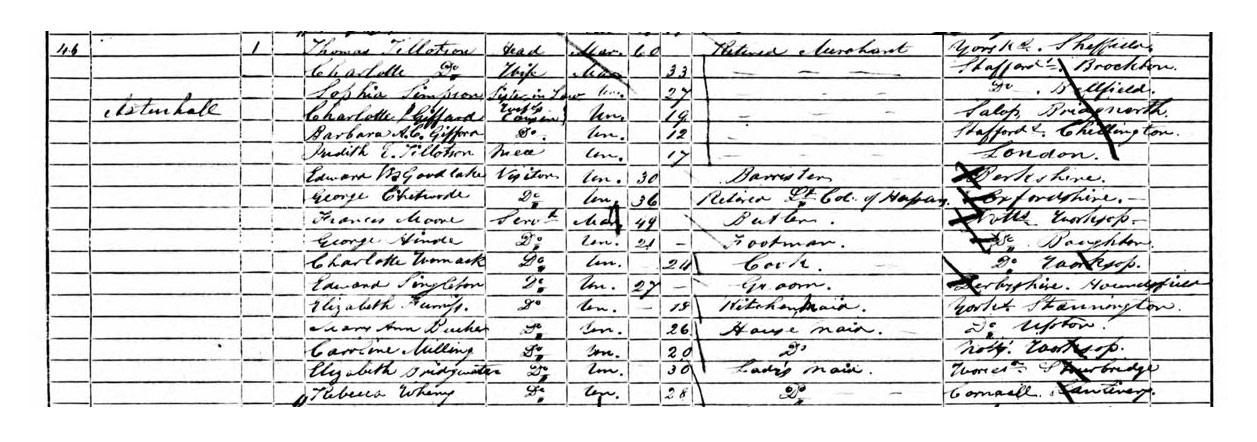
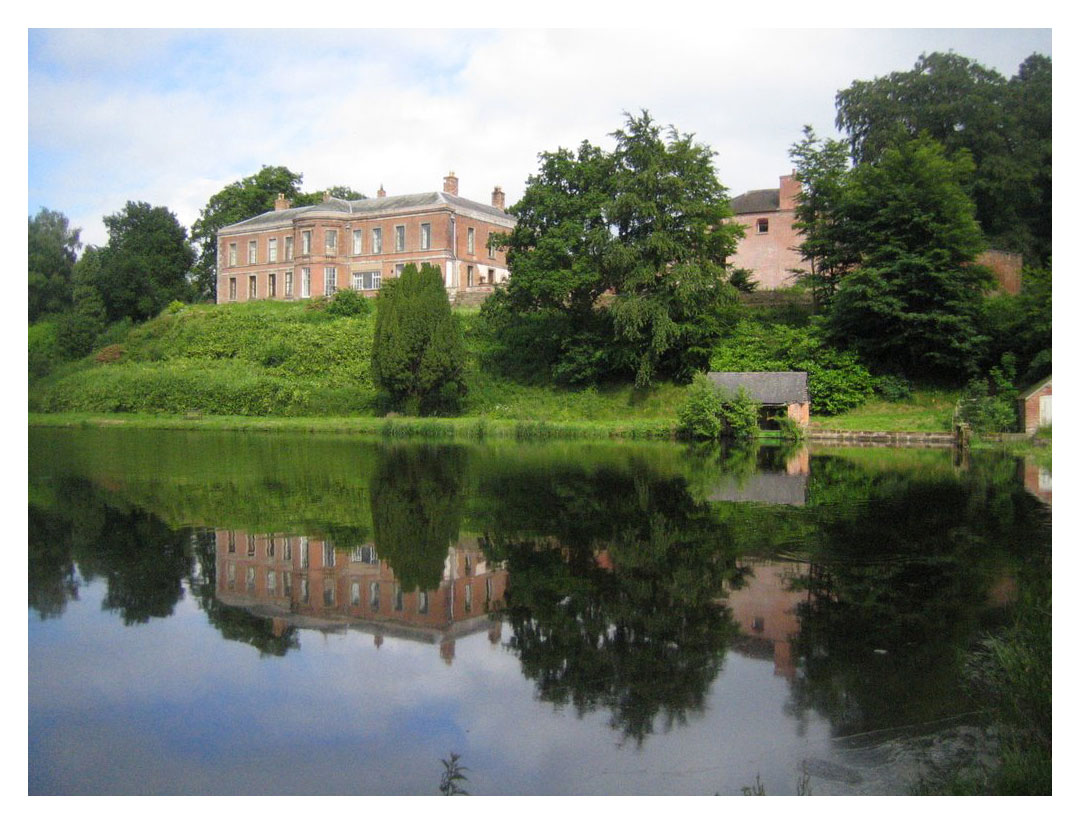
In the 1861 Census, George Chetwode was a visitor at Aston Hall, the Yorkshire home of Thomas Tillotson, a retired Merchant.
(Click on image to enlarge)
1861 Census
Aston Hall, Aston Cum Aughton, Yorkshire.
George Chetwode, Visitor, Unmarried, 36, Retired Lieut-Colonel of Hussars, b. Oxfordshire.
1871
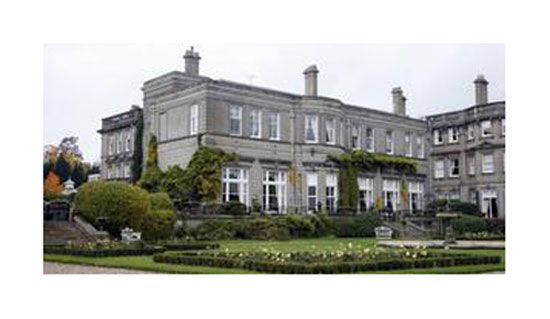
Rangemore Hall, Tatenhill, Staffs
(Click on image to enlarge)
In the 1871 Census, George Chetwode was staying with his wife and young children in in Rangemore Hall, Tatenhill, Staffs, the home of his father-in-law, M.J. Bass MP, head of the Bass Brewery.
(Click on image to enlarge)
1871 Census
Rangemore ["Rangemoor"], Tatenhill, Staffs.
M.T. Bass, Head, Married, 71, MP, DL [Deputy Lieutenant of the County], JP (brewer and Landowner), b. Burton on Trent, Staffs.
George Chetwode, Married, 47, Retd [?] Lieu Col, b. Chesterton, Oxfordshire.
Alice J Chetwode, Married, 27, b. Yoxall, Staffs
Philip W., 1, b. London, Middlesex
Evelyn A., 4 months, b. Tatenhill, Staffordshire.
[PB: Michael Thomas Bass, MP for Derby 1848-1883, was head of the Bass Brewery (Burton Upon Trent is the nearest large town). At this time, thanks largely to its exports of India Pale Ale throughout the Empire (indeed, as its publicity proclaimed, to "every country in the globe"), Bass was the world's largest brewery, and its red triangle — the UK's first registered trademark — universally recognised. (Recall the bottles of beer on the counter of Manet's Bar at the Folies-Bergere (1882).)]
For family connections, see thepeerage.com/p4839.htm#i48384.
In early 2016, parts of Rangemore Hall were for sale. Images could be seen at fineandcountry.com/uk/for-sale/rangemore-rangemore-hall-dunstall-road/de13-9rh/50031092. A substantial illustrated brochure was also available for download. (accessed 1.1.2016)]
1881
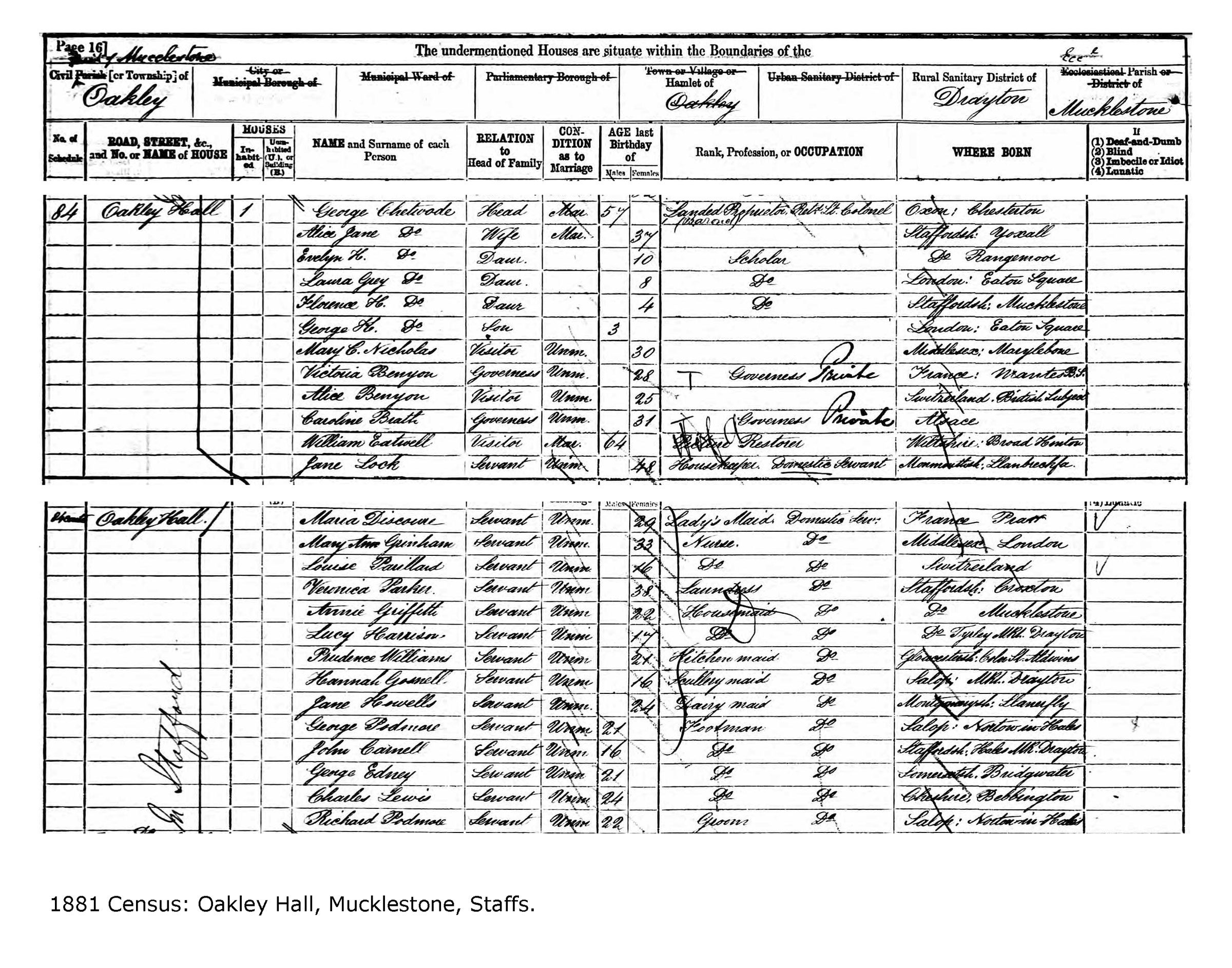
In the 1881 Census, George Chetwode and his wife Alice Jane were living at Oakley Hall, Mucklestone, with their three daughters and the younger of their two sons. A further twenty-one people were in residence: three Visitors, two Governesses, a Picture Restorer, a Housekeeper Domestic, a Lady's Maid, two Nurses, a Laundress, two Housemaids, a Kitchen maid, a Scullery maid, a Dairy maid, four Footmen, and a Groom. Farm servants, Gardeners and others lived nearby.
(Click on image to enlarge)
1881 Census
Oakley Hall, Mucklestone, Staffs.
George Chetwode, Head, Married, 57, Landed Proprietor [word in parenthesis illeg.], b. Chesterton, Oxfordshire.
Alice J Chetwode, Wife, Married, 37, b. Yoxall, Staffs.
Evelyn H. Chetwode, Daughter, 10, Scholar, b. Rangemoor, Staffs.
Laura Grey Chetwode, Daughter, 8, b. Eaton Square, London.
Florence H. Chetwode, Daughter, 4, Scholar, Mucklestone, Staffs.
George H. Chetwode, Son, 3, b. Eaton Square, London.
1901
In the 1901 Census, George Chetwode is living with his wife, three of his daughters (two of whom are now married), and a granddaughter. There was one visitor, and twenty-three servants — four servants for every family member.
(Click on image to enlarge)
1901 Census
Oakley Hall, Mucklestone, Staffs.
George Chetwode, Head, Married, 77, Lieut.Col. late 8th Hussars [Comment added: "Army Officer"], b. Chesterton, Oxfordshire.
Alice J. Chetwode, Wife, Married, 57, [no occupation shown], b. Yoxall, Staffs.
Evelyn H. Laming, Daughter, Married, 30, [no occupation shown], b. Rangemoor, Staffs.
Laura G. Eliot, Daughter, Single, 28, [no occupation shown], b. London.
Florence H. Chetwode, Daughter, 24, [no occupation shown], Mucklestone, Staffs.
Frederica B.C. Eliot, Granddaughter, 6 months, Mucklestone, Staffs.
Twenty-four others are listed.
Death & burial
Died at Oakley on the 28th of June 1905 in his 82nd year and was buried on the 1st of July 1905 at Mucklestone, Market Drayton.
Death registration
George Chetwode, 81, April Quarter, Market Drayton.
In his will he left (excluding settled estate) £10,000.
Extract from the Newport and Market Drayton Advertiser, 8th of July 1905:
"On Saturday afternoon of last week the remains of the late Sir George Chetwode, whose death we had reported last week were interred in Mucklestone churchyard. Notwithstanding an expressed family wish that the funeral should be quiet and un-ostentatious the obsequies were attended by a large number of relatives, friends, tenants and work-people.
The coffin, which was of un-polished oak, was made from timber grown on the estate and was conveyed on an open bier from Oakley Hall to Mucklestone, eight of the estate workers acting as bearers.
[The list of mourners included his wife, Lady Alice, and his son, Major Sir Philip Chetwode, DSO.]
The service was fully choral, the organist playing "O' Rest in the Lord," as the funeral cortege entered the church and whilst the body was being conveyed to the grave-side the organist impressively played the Dead March in 'Saul.'
In accordance with expressed wishes there were but few wreaths."
In the churchyard of St. Mary's at Mucklestone, Cheshire, there are two similar tombs, on one of which is inscribed:
"Here lieth the body of Sir George Chetwode, 6th Baronet of Oakley in this parish and Chetwode, C. of Buckinghamshire. Born 20th of July 1823 — Died 28th of June 1905."
On the other (in which his wife is buried) it says:
"Dame Alice Jane Chetwode, wife of Sir George Chetwode, 6th Baronet. Born August 7th 1843 — Died November 26th 1919."
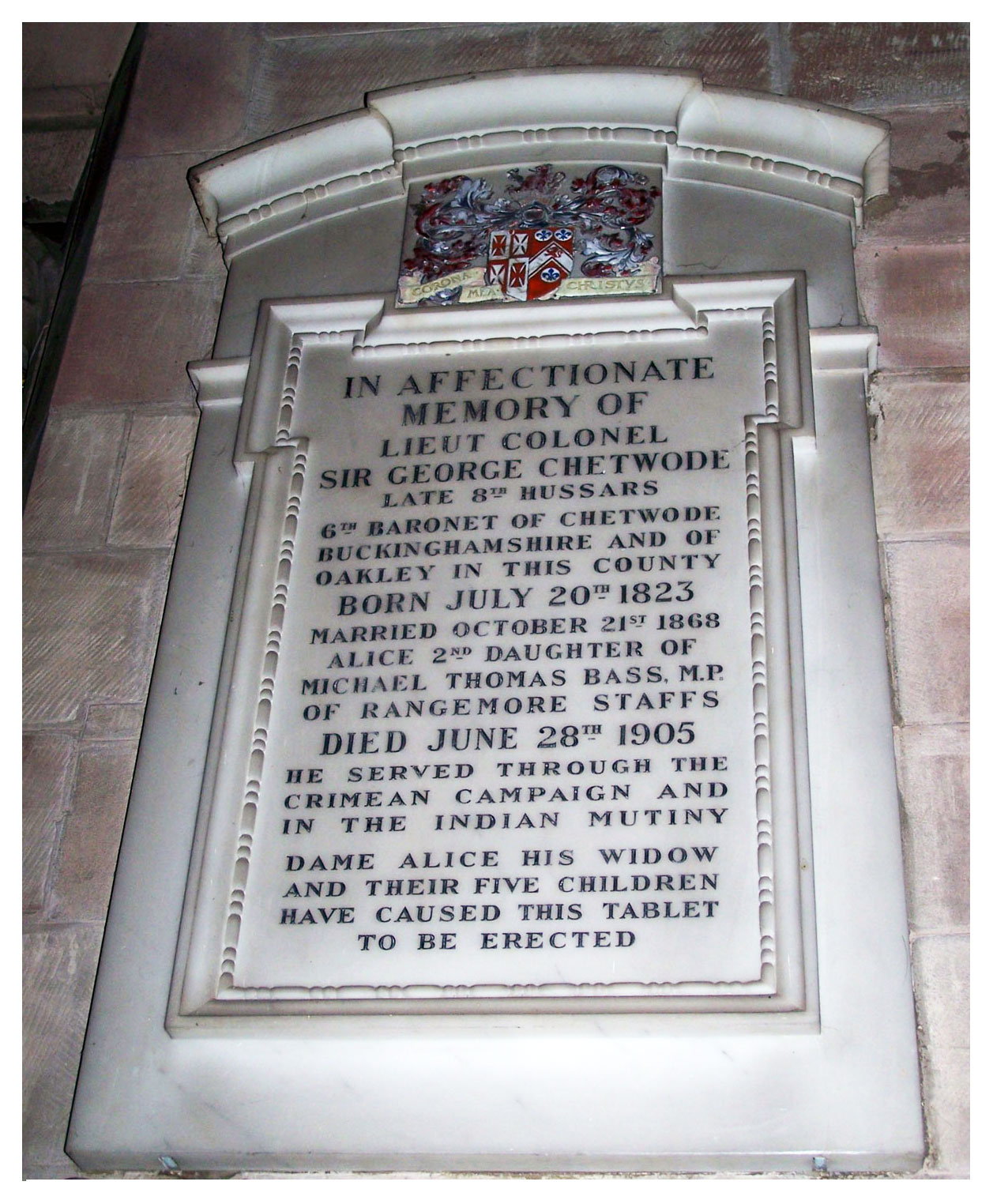
There are a number of memorial windows and tablets to the Chetwode family in the church itself, to a total of some seven or eight, and two in particular relate to George Chetwode and his wife.
The two are identical in appearance and measure some five feet by 3 feet six inches. At the top is the coat of arms of the respective families.
(Click on image to enlarge)
On the left hand tablet:
"In affectionate memory of Lieutenant-Colonel George Chetwode, late 8th Hussars, 6th Baronet of Chetwode, Buckinghamshire and of Oakley in this county.
Born 20th of July 1823 — Married 24th of October 1868, Alice, second daughter of Michael Bass, M.P. of Rangemoor, Staffs.
Died 28th of June 1905. He served throughout the Crimean War and during the Indian Mutiny.
Dame Alice, his widow, and their five children have caused this tablet to be erected."
On the right hand tablet:
"In affectionate memory of Dame Alice Jane Chetwode, widow of Sir George Chetwode, 6th Baronet of Chetwode, Buckinghamshire and of Oakley in this county. Born August 7th 1843 — Died November 26th 1919.
This tablet has been erected by their five children in remembrance of the love they bore her and of her love and care which never failed them."
Further information
[PB: In 2016 there was no Wikipedia article for George Chetwode, but there were for his two sons.]
Philip Walhouse Chetwode served in the 19th Hussars for the Chin Hills and South African campaigns, in the latter of which he gained the D.S.O. Served in France and Palestine during 1914-18, commanding a Corps in Egypt from 1916-18, Commander-in-Chief, India, in 1930. Later Field-Marshal, G.C.B., K.S.C.I., K.C.M.G., Commander of the Legion of the Nile, 2nd Class, Commander of the Legion of Honour, 3rd Class, Croix de Guerre, and the Order of the Sacred Treasure of Japan, 1st Class.
His brother, George Knightley Chetwode served in the Navy as Captain, R.N. C.B. Served in China in 1900 and in World War One. He was awarded the Russian Order of St. Stanislas and the Greek Order of Military Merit.
[PB: There is a an article at https://en.wikipedia.org/wiki/George_Chetwode. There are portraits in the National Portrait Gallery (e.g. at http://www.npg.org.uk/collections/search/portraitLarge/mw169348/Sir-George-Knightley-Chetwode).]
Crimean War diary discovered in attic
Burton Mail, May 11 2009.
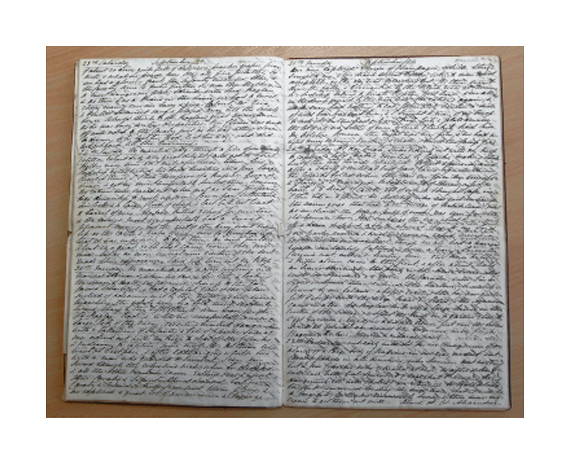
A DIARY detailing the horrors of one of the most famous wars in history is set to go under the hammer after being found in a dusty Burton attic.
The chronicle of a year in the 1853-56 Crimean War may fetch £6,000 when it is sold at Richard Winterton's auction rooms, in Hawkins Lane, next week...
Mr Winterton said the diary, written by Lieutenant Colonel Sir George Chetwode, was discovered in the corner of an attic of a derelict house.
The couple who found the book lying at the bottom of a metal trunk covered in newspapers dating back to the early 1950s initially thought it was 'rubbish'.
They were prepared to accept £50 until Mr Winterton said the diary was 'of national importance' and likely to send historians weak at the knees.
(Click on image to enlarge)
It is easy to understand the reasons underlying the auctioneer's assessment, given that Lt Col Chetwode, a horseman with the 8th Hussars from Oakley, west Staffordshire, describes the Battle of Inkerman, Siege of Sevastopol and, perhaps most importantly of all, the Charge of the Light Brigade. In one entry about this battle from October 25, 1854, which describes the clash between Turkey, Britain, France and Sardinia on one side, and Russian on the other, he writes: "The Russians were advancing with 6,000 cavalry, 30 guns and some 10,000 infantry.
"It was an anxious moment for the Russians outnumbered us three to one, but nothing could stand the dash of our gallant fellows."
Mr Winterton said of the diary, found with a letter to the horseman's sister, Laura, said: "It's of national importance, and history from somebody who was actually there in one of the most famous battles of modern times."
[Source: www.burtonmail.co.uk/Crimean-War-diary-discovered-attic (accessed 1.1.2016).]
According to a comment on the Burton Mail website, the diary was sold on the television programme "Dickinsons Real Deal", 11th May 2009, for about £1,400.
References & acknowledgements
Census information for 1851 kindly provided by Chris Poole.