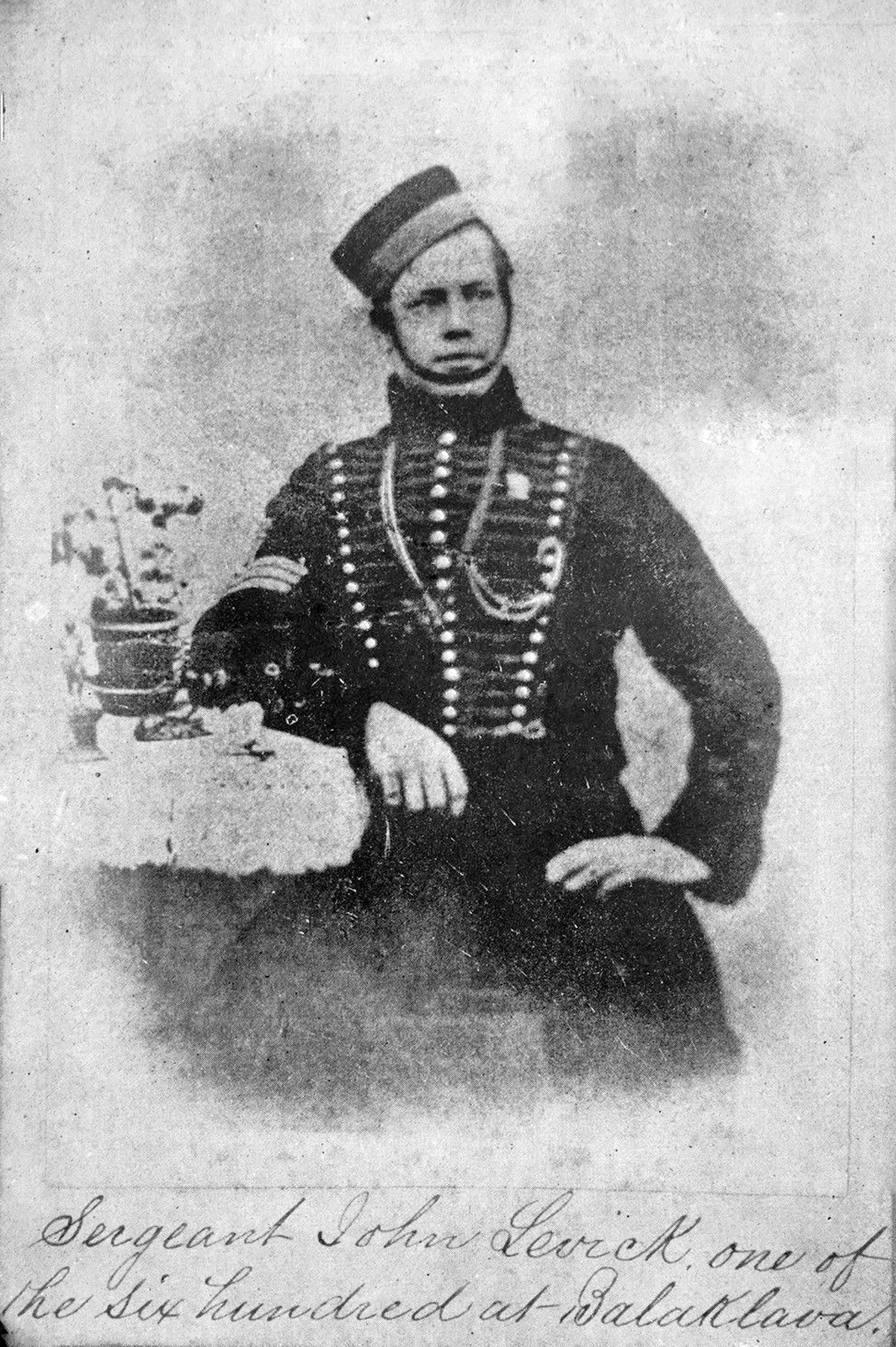
Born c.1835.
Enlisted at Nottingham on the 10th of February 1853.
Age: 18.
Height: 5' 7".
Trade: Fender-maker.
[PB: Fender-maker - rope boat fenders used for e.g. canal boats? e.g see YouTube: George the master fender-maker (accessed 14 May 2018). Many images online.]
Embarked for the Crimea aboard the H.T. "Wilson Kennedy" on the 2nd of May 1854.
He is shown as being at the Scutari Depot from the 3rd of October 1854 and sent to rejoin the regiment on the 3rd of November.
[PB: This of course implies he was not in the Charge at Balaclava, 25th October 1854. But see his account of the Charge, below.]
From Private to Corporal: 1st of November 1854.
Corporal to Sergeant: 27th of May 1856.
"Absent without leave" from the 20th of September 1857, and shown as a "Deserter" from that date.
Total service of 4 years 215 days.
Can find no further trace to 1879, except that in WO/25/3869 there is an entry in red ink by his name, "See 8th Hussars 377/15/11/95.", but there no indication what this means.
Entitled to the Crimean medal with clasps for Alma and Sebastopol.
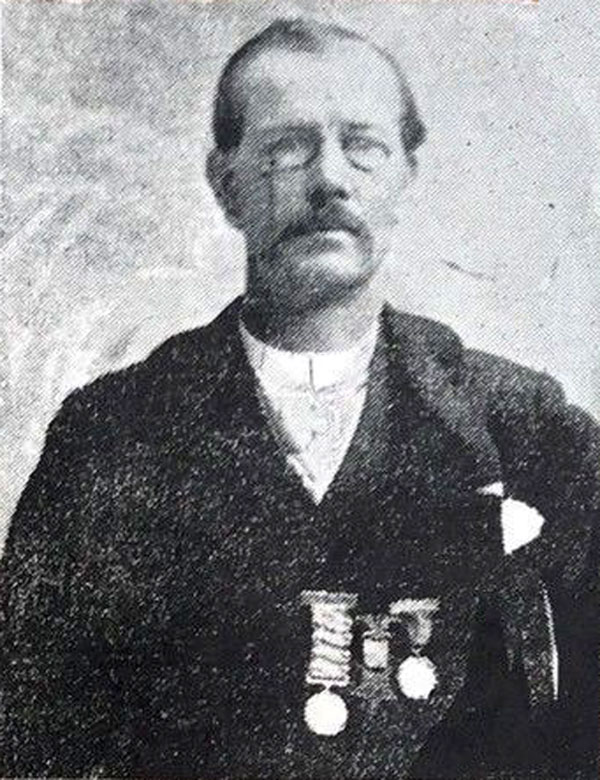
The chance finding of an article in the New York Times, 28th of November 1877 shows that he went to America following his desertion from the Army. The item was headed:
Charge of the Light Brigade.
Letter from one of the heroes of Balaclava, now a prisoner in an Ohio Workhouse for an Assault and Battery. From the Cleveland Leader Nov. 21st. Last Sunday morning an interview between a reporter and John Levick, one of the 600 who made the charge at Balaclava was published in the Leader, but there was some misunderstanding of Levick, which he corrects below in an autograph letter written in a plain bold hand, well composed, and correctly spelled.
The statements aroused much sympathy and interest in the prisoner, and yesterday a plea of "guilty" to the charge of assault and battery was taken by the Prosecuting Attorney, and the Judge gave him 30 days in the Work-house as a light sentence which was, perhaps, inconsistent with the somewhat grave nature of the offence. The letter reads as follows:
Sir, In your account of the charge of the Light Brigade at Balaclava, published in the Sunday Leader of the 18th inst. you have me to say that I belonged to the Fifth Regiment of Hussars. There was no regiment of that number in the Crimea and no Fifth Regiment of Hussars in the British service at that time.
The only Fifth Regiment of the Light Cavalry are the Lancers, and they were not in the Crimea. There were only five regiments in the Brigade, as follows. Fourth Light Dragoons, Thirteenth Light Dragoons, Eleventh Hussars, Eighth Hussars, and the Seventeenth Lancers.
I belonged to the 8th, Col. Sherwell commanding, Majors de Salis second in command and Chetwode, Captain of my Troop.
Your account says we charged across the valley.
The valley in which the charge was made is situated between two ranges of hills; the first range is about one and a quarter miles from the village of Balaclava, across the plain of Kadikoi, and the second range being about half a mile from the first, with the Schernava, or Black River, on the other side. It was between these two ranges of hills that the charge of the Light Brigade was made. The Heavy and Light Brigades were encamped on the plain of Kadekoi when the Cossacks came thundering among our tents. The Heavy Brigade charged them over the first range of hills, when they — the Cossacks, formed in line across the end of the valley.
The Light Brigade then took up position at one end of the valley, nearest to Inkerman and received the order to — "Trot." When we got within 200 or 300 yards of the Cossacks they opened out and let us pass through. After we had captured the battery of guns in front of us, we wheeled right and left, and formed for our gallop back, which was worse than the advance, for we were still under a cross-fire, and had to cut our way through the Cossacks who had formed line again.
A day or two afterwards we pitched our tents on the Heights of Inkerman, near the windmill, afterwards blown up by an explosion. We again moved camp a few months later to within a mile of Balaclava harbour and near to where the stationary engine was put up for the purpose of drawing up the grade from Balaclava the cars containing the shot, shell and cannon used against Sebastopol.
We remained there until after the fall of that city, when we were ordered to Ismid, a Turkish village in Asia Minor, at the very point of the Sea of Marmora, and staid there until our return to England in April, 1856. I have my picture with me now, taken when I was on furlough after our return. Major Frederick Heslop, the Superintendent of the Soldier's Home, Pittsburgh, was in my brigade at Balaclava, though he was not in the charge. I was in the Home with an injured finger, and not a day would pass but he would come and sit on my bed and talk over old times and fight our battles all over again.
Very respectfully, John Levick.
Late Sergeant 8th Hussars, and one of the Six Hundred.
P.S.- I forgot to say that we embarked at Devonport, England, on board the sailing vessel "Wilson Kennedy" in April 1854 and landed at Varna, staid there only a short time, when we marched to Devna, about 12 miles from Varna, from there to Yeni Bazar, where we were reviewed by Osman Pasha. From the latter place we went on an expedition to Shumla and Silestria. [sic?]
We landed at Eupatoria, Crimea, on Sept. 12th 1854. The "Wilson Kennedy" was wrecked on her next voyage with the Sixth Enniskillen Dragoons. The Colonel, a large number of rank and file, and all the horses were lost. J.L."
PB: the "expedition to Shumla and Silestria" is often called the "Soreback Reconnaissance".
(Ambiguous reference to JL in 1502 J Kane 13th Light Dragoons. /allmen/allmenL/allmenL_13LD/lane_j_1502_13LD.html)

[PB: In May 2018 a photograph of John Levick came up for auction on eBay. Roy Mills swiftly researched JL's US military career and came up with some interesting results.]
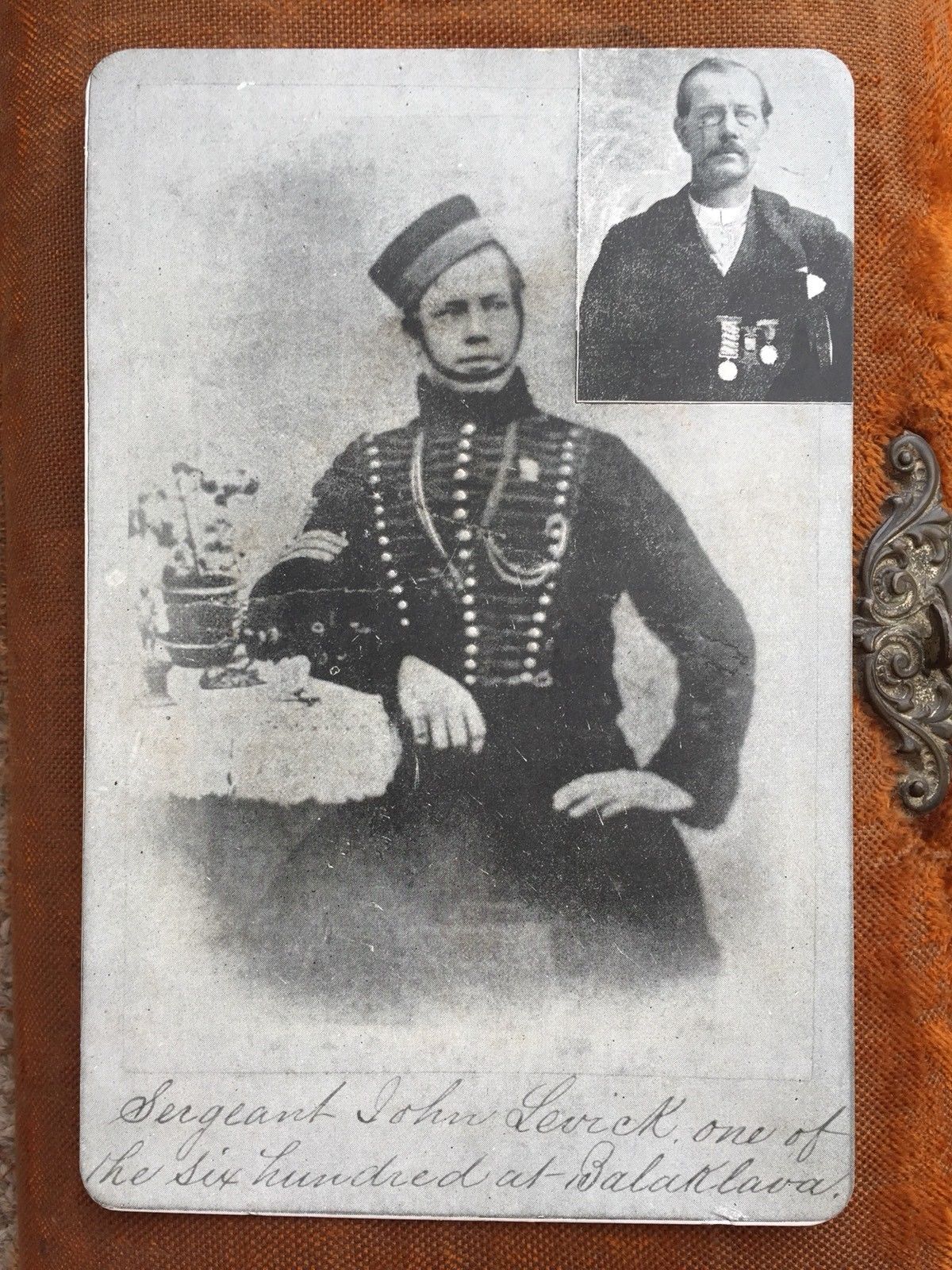
The seller wrote:
"I'm not 100% what this is except it came in a Victorian British family photo album that was beyond saving. The photograph resembles how a newspaper is printed. My best theory is the Sergeant pictured had these made up later in life to raise some much needed funds, hence a picture of him in service and much later wearing his medals. I'm sure with some digging it could be ascertained. Nice item, well worthy of research and with a sensible starting price and no reserve."
Fritz and Brits Militaria
Joseph McLaughlin
Unit 17, Lea Green Business Park
Eurolink
St Helens WA9 4TR
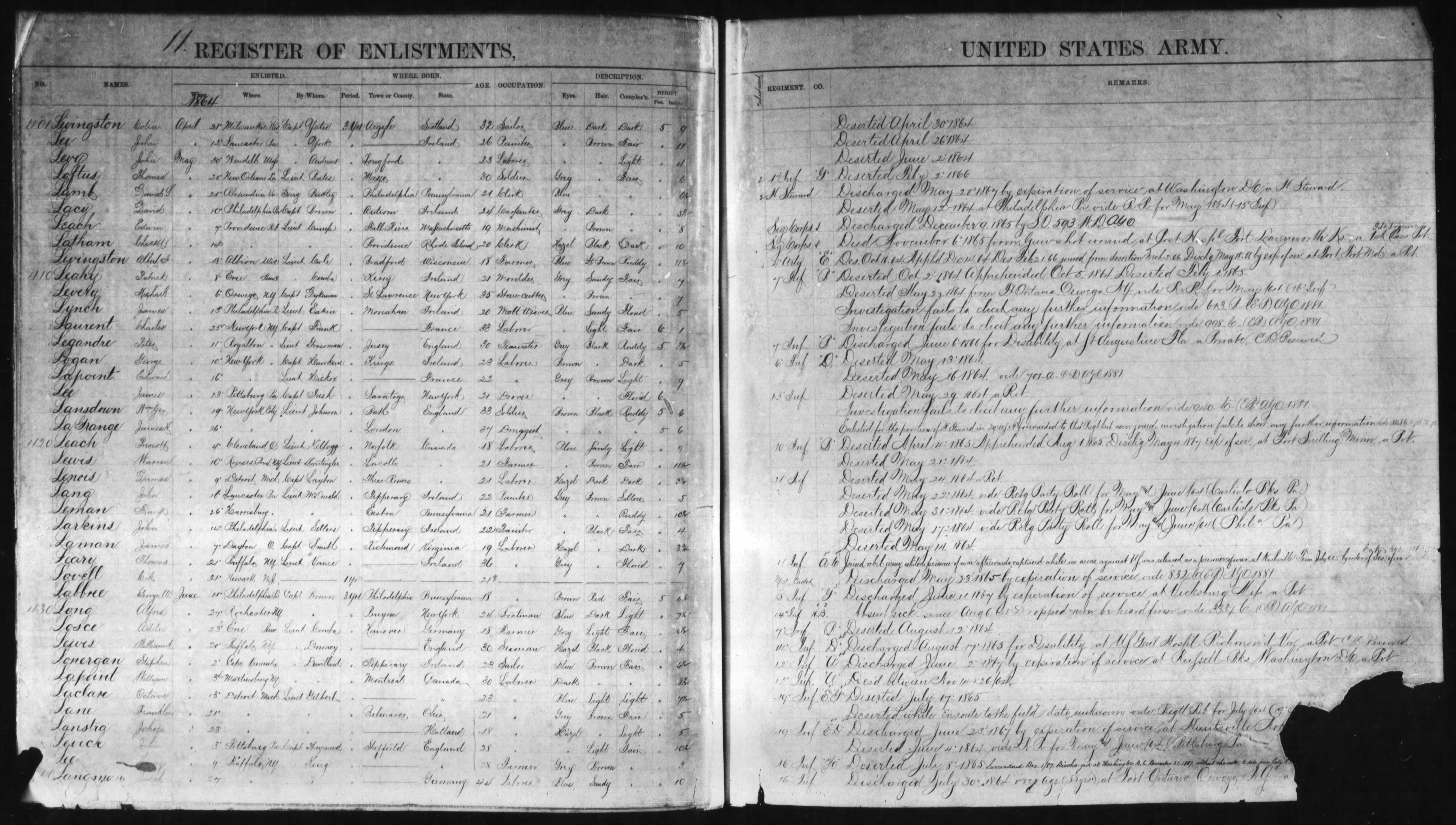

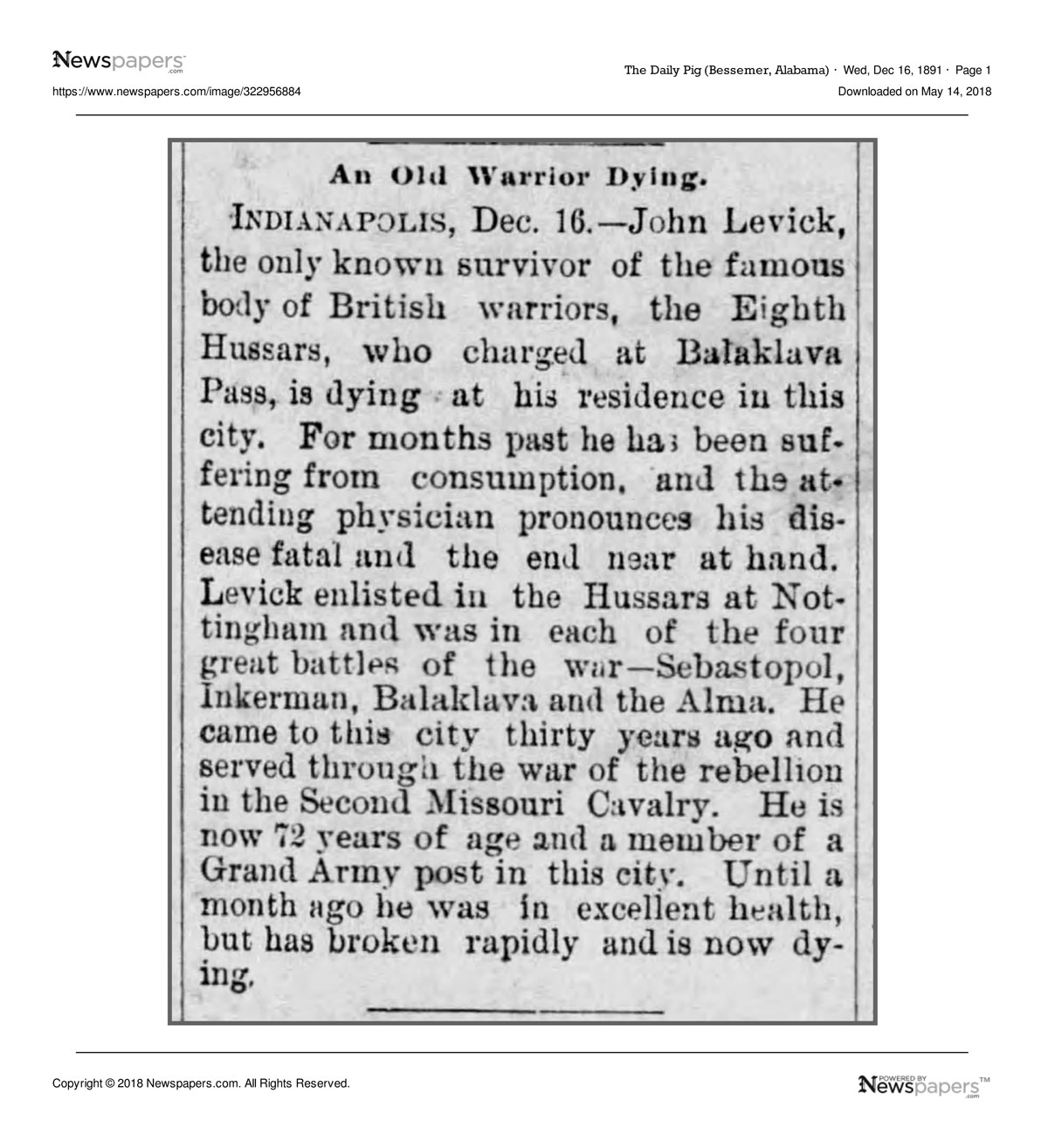
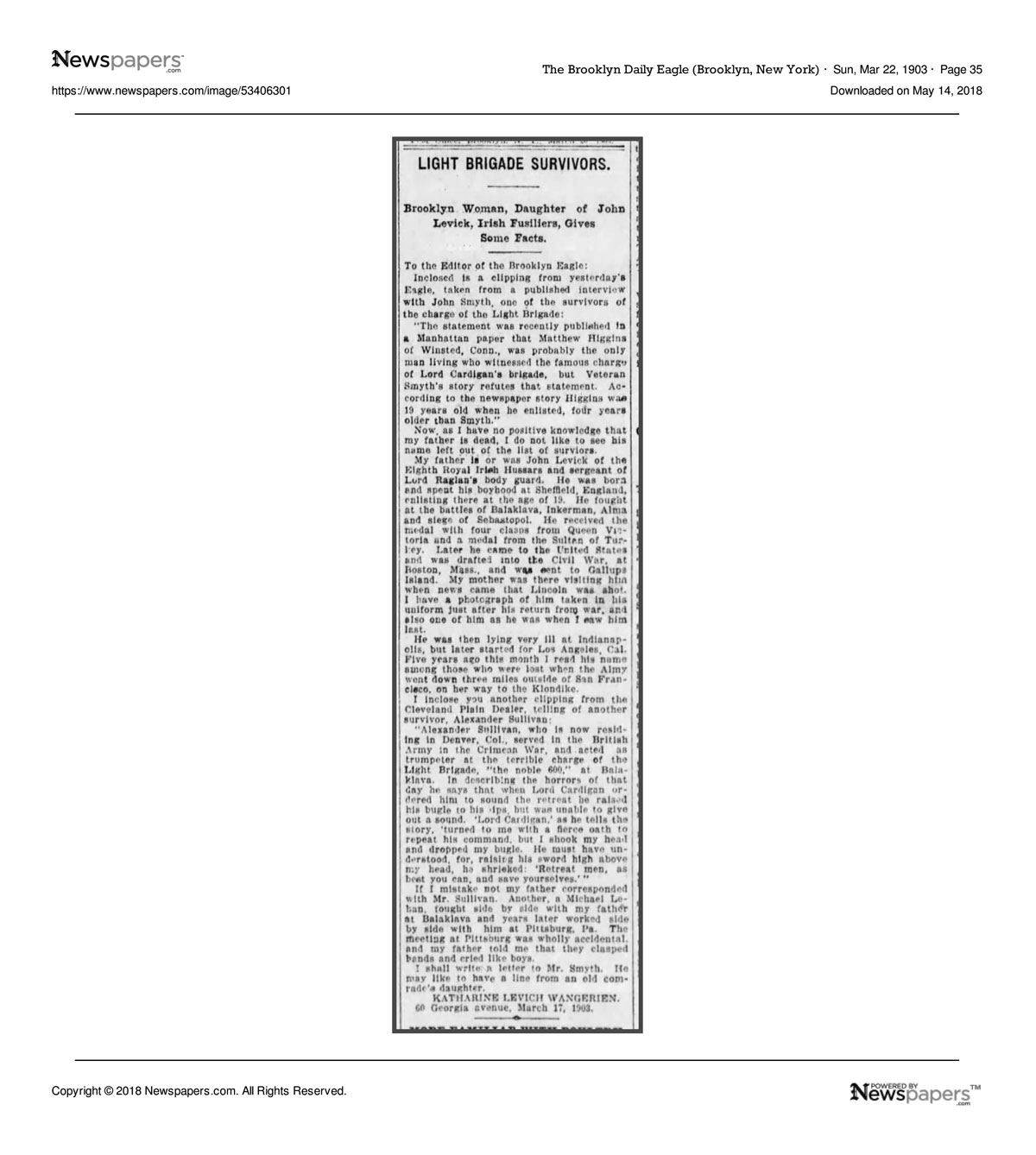
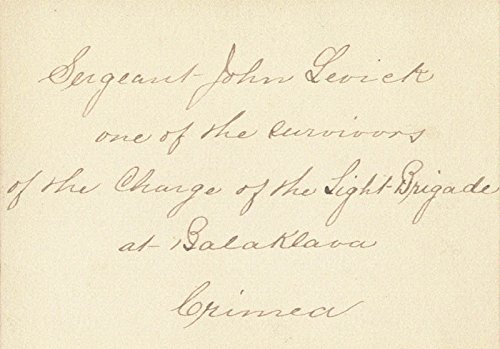
[PB, 11.09.2019: I notice there is an alleged signature available online for $108 +p&p. The handwriting appears to be the same as on the portrait photograph above. But what suggests it is JL's hand, and not someone else's? ]
Product Description
JOHN LEVICK
The sergeant pens his name on this 2¼x3¼ card Signature: "Sergeant John Levick/ one the survivors/ of the Charge of the Light Brigade/ at Balaklava/ Crimea", in black ink, 2¼x3¼. The Charge of the Light Brigade was a British military offensive mounted during the Crimean War. The charge took place during the Battle of Balaclave on October 25, 1854, and was led by Lord Cardigan. Notable for its reckless nature, the charge illustrated the bravery of the British soldiers, while casting into doubt the competency of their commanders. The British suffered a high number of casualties with 118 men killed, 127 wounded and about 60 taken prisoner. Ultimately, the assault proved to be foolhardy as the British made no discernible gains. Signer merits further research. Lightly toned. Otherwise, fine condition. — Please contact us if you have any questions or require additional information. HFSID 27885
[Source: Amazon.com: John Levick — Signature (accessed 11.9.2019).]
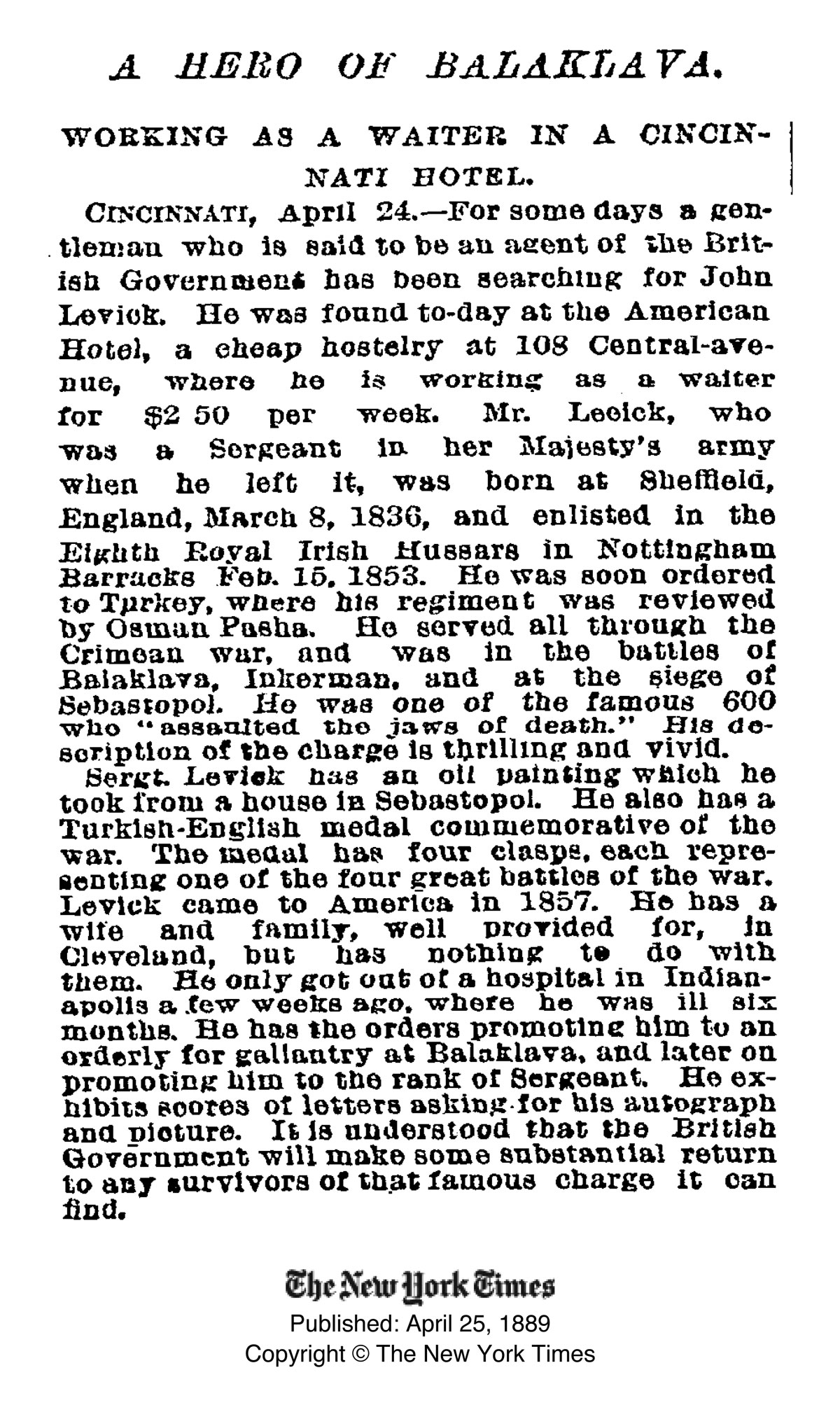
[PB: According to Jean M. Morris in Across The Gap, 2016 (a history of Widnes), The Liverpool Mercury reported in 1889 that the British Government were seeking information about John Levick. [Why? Find this reference.] 1382, George Macgregor, 4th Light Dragoons, responded, taking the opportunity to criticise the Government's callous treatment of veterans. A more complete text can be found : 1382, George Macgregor, 4th Light Dragoons.]
"In last Saturday's issue [exact date?] you refer to an agent of the British Government searching for the whereabouts of John Levick, whom you say served all through the Crimean War. With your permission I wish to give you and your readers a little insight into the doings of the aforesaid British Government respecting the noble 600. John Levick was well known to me. He was a sergeant for some time in the 8th Hussars. I am rather surprised to hear that the British Government are so anxious to make "some substantial return to any survivors of that famous charge." If they intend to do anything, they had better do it quickly, for up to the present they have shown to such survivors nothing but studied neglect...
George McGregor, One of the Six Hundred.
10 Hutchinson Street, Widnes, October 30th 1889.
[Source: Jean M. Morris, Across The Gap, Lulu, 2016.]