
[PB: If GDR was 24 in 1849, he was born c.1825.
EJB had no information about GDR's origins. There are suggestions in some sources that he was born in Jamaica, the son of Hon. William Ramsay. Some sources reported in 186? that "He has some coloured blood in his veins."]
Enlisted at Costessey [Norwich] on the 28th of December 1849.
Age: 24.
Height: 5' 8".
Trade: None shown.
Tried by a Regimental Court-martial on the 3rd of June 1854 for "insolence to a superior officer" and sentenced to 50 lashes, but this sentence was remitted.
[PB: Where was this - Varna?]
At Scutari, 11th of October 1854 - 3rd of February 1855.
From Private to Corporal: 1st of January 1855.
Clerk to the A. A. General, Cavalry Division, attached to the 6th Dragoons, on 12th of November 1855.
Prisoner from the 2nd of January and reduced to Private, by a Regimental Court-martial on the 7th of January 1856.
Embarked for India from Cork aboard the S.S. "Great Britain" on the 8th of October 1857.
In his manuscript account of the Indian Mutiny, 1117 James Wightman, 17th Lancers, tells of the following incident during [the pursuit of] Tantia Topee:
"It was at this time that Major White had a narrow escape - he had singled out a rebel officer and, by some mishap, instead of his sword passing through the body of the rebel, the point went under his arm. Before the rebel had time to cut at the Major, Private Ramsey ran his lance through him, tumbling him out of the saddle, a corpse...
Major White and myself were at the bottom of a nullah [riverbed, ravine], when Ramsey again made himself conspicuous on his Arab, D.31, by flying over our heads.
'Whoever was that?' said Major White, and when told it was Ramsey he remarked that 'he had been in many a hunting field and never saw such a leap.'"
[PB: Explain? Perhaps draw attention to similarities between what happened in India and later in Jamaica - popular protest by the subject population followed by devastating punitive action by the British army, including of course Ramsay. ]
From Private to Corporal: 26th of February 1858.
Corporal to Sergeant: 10th of April 1858.
The musters for July-September of 1858 show him as being "On Detachment to Sholapoore" during the whole of this period.
In action against the rebels at Zeerapore on the 29th of December 1858 and at Baroda on the 1st of January 1859.
Reduced to Private by a Regimental Court-martial on the 2nd of June 1859.
On passage from India on the 26th of January 1863, and on the Depot roll from the 1st of May 1863.
Discharged, "time expired", from Canterbury on the 6th of May 1863.
Served 12 years 245 days.
Conduct: "Latterly good". Not in possession of any Good Conduct badges.
Entitled to the Crimean medal with clasps for Alma and Sebastopol, and the Turkish medal.
Mutiny medal without clasp.
A "W.G. Ramsey" [PB: sp?] is shown in the 1877 list of members of the Balaclava Society, but in a copy of this formerly belonging to 1353 William Pearson (see the "Memoirs" file) there is the comment "Not known" in the latter's handwriting by the side of his name.
[PB: Clearly not GDR, but I wonder who this was?]
[Source?: https://blogs.princeton.edu/graphicarts/2009/10/photography_album_documenting.html (accessed 26.12.2016)] Check this Ancestry link for a reference to be followed up:"Gordon_Duberry_Ramsay_Provost_Marshal_General_of_Jamaica_by_Adolphe_Duperly_1865_Cropped 1865 Kingston, Jamaica From a CDV by Adolphe Duperly". http://mv.ancestry.co.uk/viewer/ea30501c-2a72-48aa-9ec6-fecbe35d71f8/6530540/1328594578
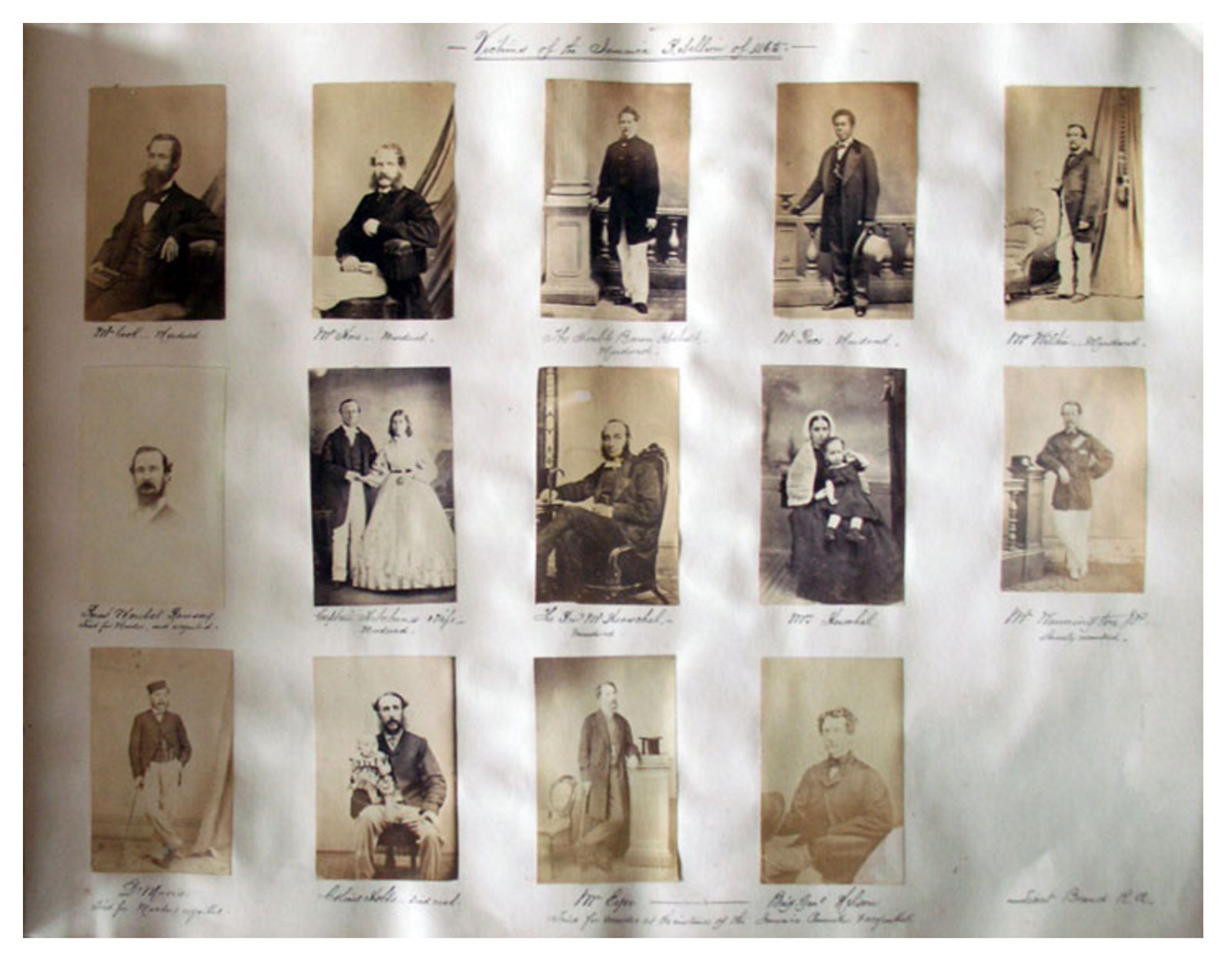
Would it be possible to get a better image? Name everybody, if possible.
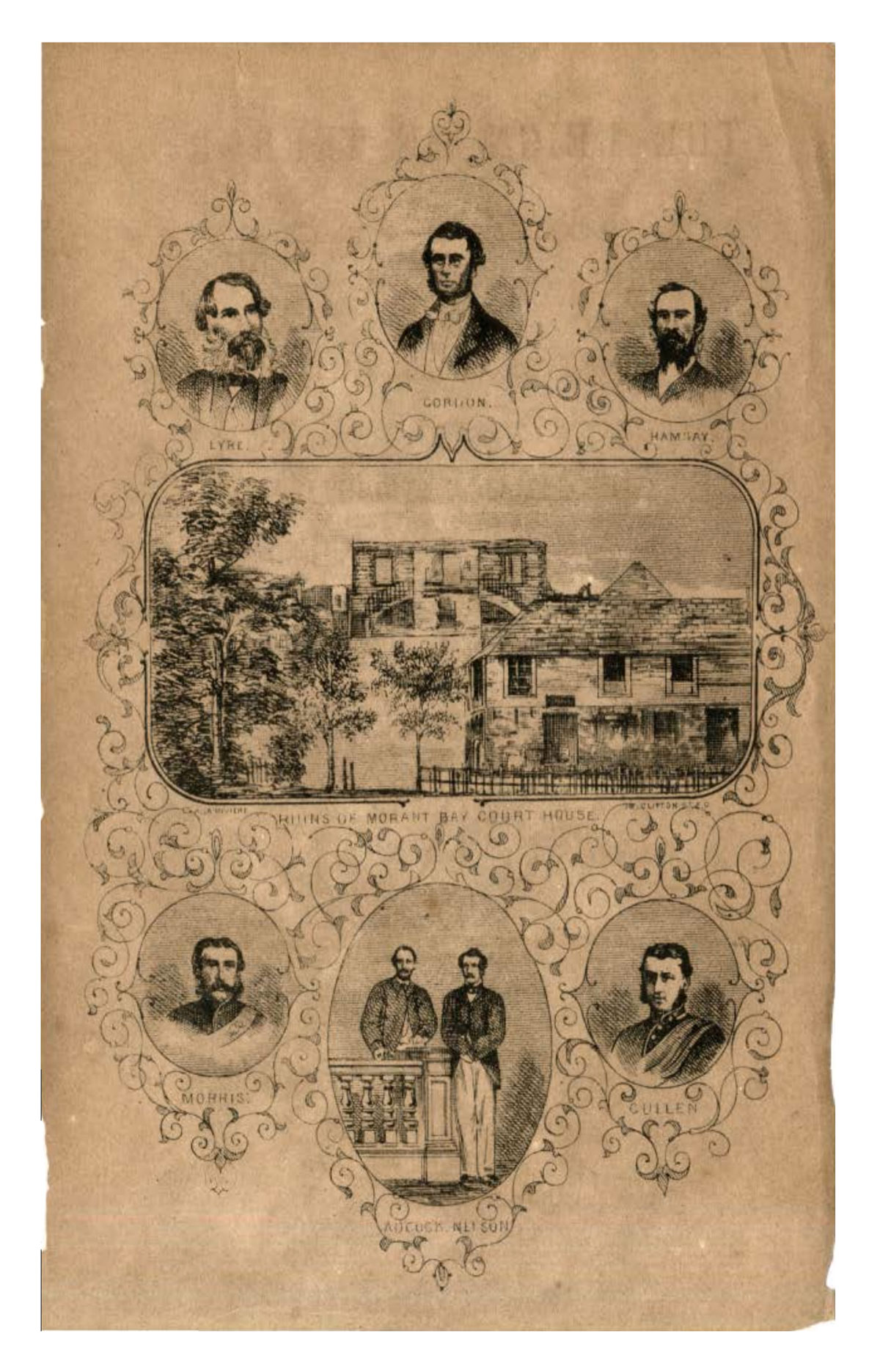
Ramsay is top right. Name others.
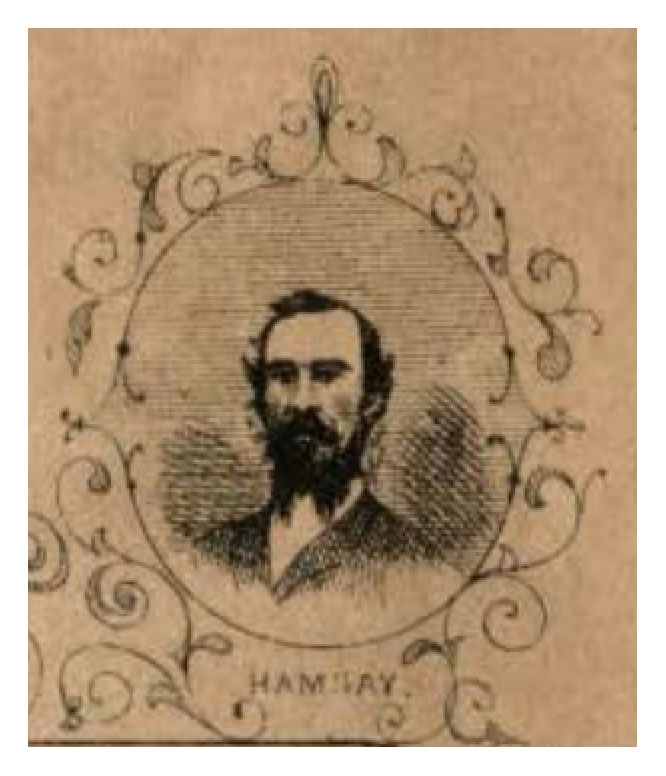
Ramsay features in numerous accounts of the Morant Rebellion.
Such is his notoriety in the historical record that he is still frequently named in modern accounts: [AWKWARD - REWRITE]
Governor Eyre ... ordered the arrest of a colored opposition politician named George Gordon on charges of inciting the rebellion. Gordon was a well-known figure who frequently communicated with a number of British liberals in London. In what would later become one of the most controversial responses to the insurrection. Eyre had Gordon transported into the jurisdiction in which he had declared martial law. A military commission tried and hanged Gordon six days after he had surrendered to authorities.
Soldiers and militiamen took the atmosphere of violent recrimination considerably further than even Eyre seems to have intended. A provost-marshal named Duberry Ramsay was probably the most vicious. Ramsay was named the head of a prison camp during the martial law period, and in this capacity he sadistically whipped scores of prisoners and executed dozens summarily on the barest and flimsiest of evidence. Ramsay made possible the successful prosecution of Gordon by inducing prisoners in his camp to testify against Gordon in the military commission at which Gordon was tried.
[Source: Review by John Fabian Wit of R.W. Kostal, A Jurisprudence of Power: Victorian Empire and the Crisis of Legal Framework (New York: Oxford University Press, 2005), in Harvard Law Review, 2007, Vol. 120, pp. 754 -- 797. Wit is Professor of Law and History, Columbia University. For a longer extract, see here. The entire review is here (accessed 29.12.2016).]


"13th District 19th Ward" - where was that? Possibly 59th Street between 2nd and 3rd Avenue?
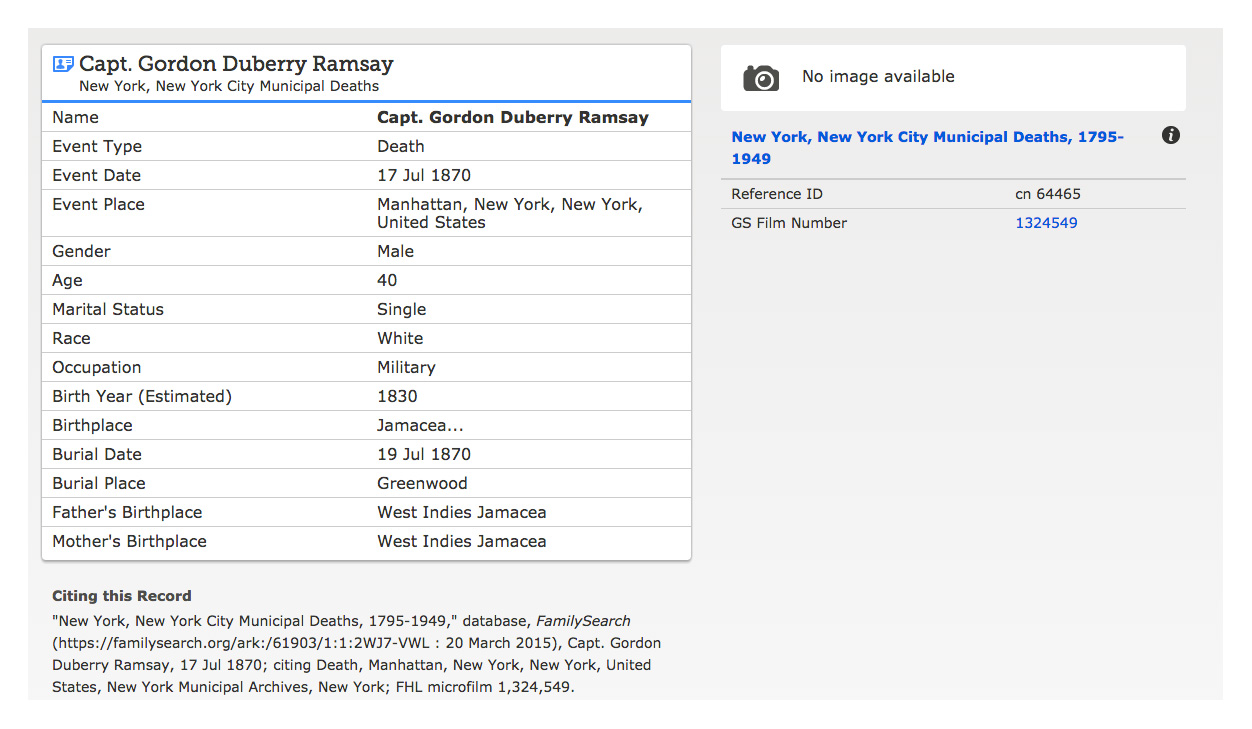
CHECK TRANSCRIPTION: Ramsay - On Sunday, July 17th GORDON DUBERY, son of the late Hon. Wm. Ramsay of Jamaica, West Indies, in the 40th year of his age.
Funeral on Tuesday, July 19th, at 4 o'clock P.M., from St.Mary's Episcopal Church, Classon ave., Brooklyn.
Brooklyn Daily Record, 17 July 1870.
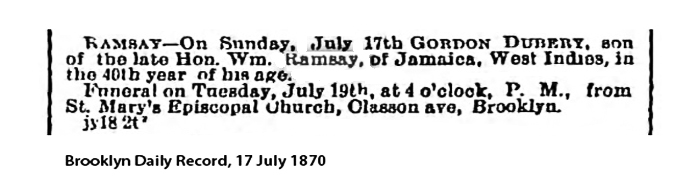
RAMSAY - On Sunday, July 17th GORDON DUBERY, son of the late Hon. Wm. Ramsay of Jamaica, West Indies, in the 40th year of his age.
Funeral on Tuesday, July 19th, at 4 o'clock P.M., from St. 13th
Mary's Episcopal Church, Classon ave., Brooklyn.
Brooklyn Daily Record, 17 July 1870.
[PB: I found this rather intriguing entry, by ??, on RootsChat. It appears to be a couple of quotations, but from what source? There is an article about Jamaica in The Times, 13 November 1866, p.7, but it does not contain these words. Could the "brave and reckless...He had to quit Jamaica and came hither" section have come from an obituary in a New York newspaper?]
Lancashire / Re: One for Liverpool Annie, Friday 07 March 2008.
Gordon Duberry Ramsay, in 1865, was Provost Marshal, Jamaica.
The Government of Jamaica institutes a prosecution for murder against Mr. Ramsay,
the Provost-Marshal, though it is not suggested that his cruelties were committed from any feelings of private malice against the victims. Mr. Cardwell advises Sir Henry Storks, as Governor of Jamaica, to cause careful investigation to be made in those cases which appear to require it, with a view to such further proceedings as may be requisite and just. "Great offences," he says, "must be punished." [+ [?]] It is to be presumed that he would not except the great offences of great offenders.
Gordon Duberry Ramsay hanged George Marshall, the judge was Alan Ker. The Times, 13 November 1866, p.7.
"He was brave and reckless and never knew fear. He was one of the famous six hundred who rode "into the mouth of hell" at Balaclava. The object of delectation [sic?] and abhorrence because of his conduct during the outbreak of '65, he had to quit Jamaica and came hither."
[Source: http://www.rootschat.com/forum/index.php?action=profile;u=25871;area=showposts;start=198 (accessed 28.12.2016).]