Home Search Index of men A-Z

LIVES OF THE LIGHT BRIGADE
The E.J. Boys Archive

Added 28.7.2013.

IN PROGRESS — NOT FOR PUBLICATION

1543, Private Matthew HOLLAND — 11th Hussars

Birth & early life

Born in London on the 21st of June 1833, the son of John Holland, of Pimlico.

Enlistment

Enlisted at Westminster on the 17th of May 1852.

Age: 19.

Height: 5' 7".

Trade: None shown.

Service

At Scutari from the 4th of April — 11th of May 1855.

Said to have been cook to Florence Nightingale whilst at Scutari.

Tried by a District Court-martial on the 19th of December 1855 for "being asleep on his post." Awarded 84 days' imprisonment, with hard labour.

Transferred to the 8th Hussars on the 10th of August 1857. Regimental No. 95.

Embarked for India from Cork aboard the S.S. "Great Britain" on the 8th of October 1857.

Served at Kotah, 22nd-30th of March 1858.

Returned to England aboard the "St. Lawrence" on the 9th of January 1864 and arriving at Portsmouth on the 2nd of May 1865.

Served 12 years 8 days.

Conduct: "good".

In possession of one Good Conduct badge. Once tried by Court-martial.

Discharge & pension

Discharged from York, "Time expired", on the 17th of August 1864.

Medals

Entitled to the Crimean medal with clasps for Alma, Balaclava, Inkerman and Sebastopol.

Mutiny medal with clasp for Central India.

Further medal information archived.

Commemorations

Attended the first Balaclava Dinner in 1875.

Member of the Balaclava Commemoration Society in 1879.

Signed the Loyal Address to the Queen in 1887.

Attended the Annual Dinners in 1895, 1906, 1909, 1910 and 1911.

He wrote from 1, Victoria Buildings, Bath Street, Nottingham, when accepting the invitation from Mr T.H. Roberts to be present at the Jubilee celebrations in 1897.

[Did he attend in 1897? If so, add to dates above.]

Attended the Coronation Dinner given by the Veterans' Association at Nottingham on the 20th of June 1911. He was then recorded as being the sole survivor of the Charge living in the town.

He had served several years in the Robin Hood Rifles and was a founder member of the Nottingham Veterans' Association. He also received help from the Roberts Fund — up to December of 1911 had been given a total of £250/7/6d.

Kelly's Directory of Nottinghamshire, 1904:

"The Nottingham and Notts Crimean and Indian Mutiny Veterans' Association has for its objects the care of all veterans residing in Nottinghamshire who fought during the Crimean war or Indian Mutiny.1st. By obtaining pensions and increase of pensions for those entitled. 2nd. By making grants of money, clothes or goods to such veterans as are in distress or needy circumstances. The Association is maintained by voluntary subscriptions. Hon. Acting Secretary, H. Seely Whitby, Manor street, Sneinton, Nottingham."

[Source: http://forebears.co.uk/england/nottinghamshire/nottingham (accessed 29.7.2013.).]

In the book 100 Years at Trent Bridge [PB: possibly by E. V. Lucas, privately printed in Nottinghamshire in 1938] there is a reference to Holland and ten other Crimean and Indian Mutiny veterans playing in a cricket match against a team of ladies from Nottinghamshire in a match that was organised by Mr Seely Whitby.

PB: It would be good to quote the report of the match.

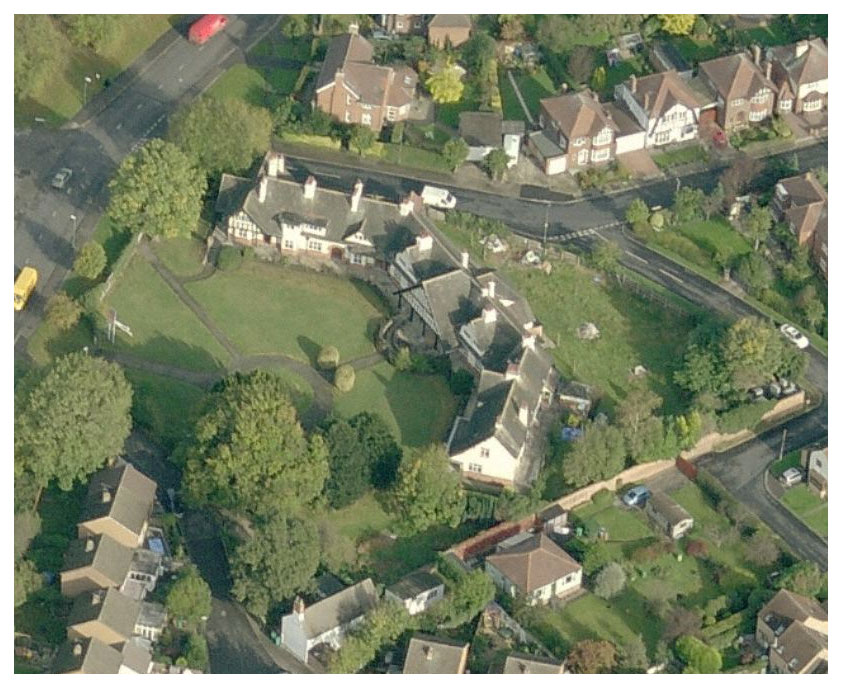
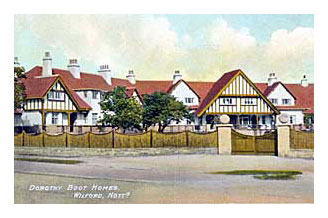
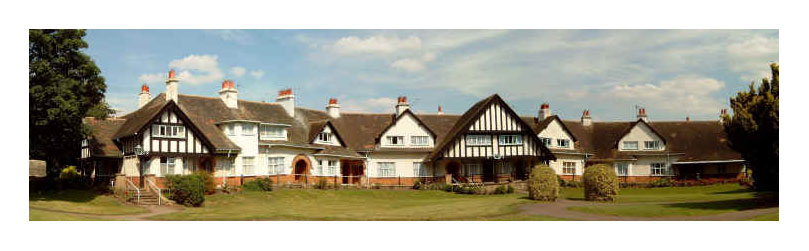
Nottinghamshire seems to have taken particular care of its veterans. For example, in the early twentieth century Jesse Boot, founder of Boots The Chemists, built a fine group of houses for their use in Wilsford, close to the River Trent:

"The Dorothy Boot Homes" are eleven houses built by Sir Jesse Boot in 1908, for Crimean and Indian Mutiny Veterans, and their wives. These are rent free, heated with hot water pipes, each house having a bath, and a garden, and the inmates have free medical attendance. There is a large clubroom, to which all Veterans in the city have access, and a library and newspapers are provided, and there is a monthly social party. The inmates are at liberty to take any respectable employment. When the Veterans have passed away, the houses will be for the use and enjoyment of aged and deserving persons."

[Source: http://www.nottshistory.org.uk/articles/mellorsarticles/wilford5.htm (accessed 28.7.2013).]


Dorothy Boot Homes for Veterans of the Crimea and Indian Mutiny, Wilsford, Nottingham.

(Click on image to enlarge)


Life after service

1881 Census

12, Platt Street, Nottingham St. Mary's.

The 1881 Census shows him as a Painter, aged 47 years, with his wife, Hannah, born in Nottingham, 38, a Lace Clipper. No children are shown.

Death & burial

Died on the 14th of December 1912, and was buried in the Veterans' Ground of the General Cemetery in Nottingham.

See copy of a photograph and details of his life and funeral, taken from the 11th Hussar Regimental Journal for 1912, in the 11th Hussar file.

Pictures, and a report of his death and funeral, also appeared in the "Nottinghamshire Guardian" on the 19th of December 1912. (See copies in the 11th Hussar file.)

Despite a belief in some quarters that a headstone was erected to him, this was not so. Enquiry of the Cemetery Superintendent brought the reply that he was interred in a public grave, No. 03O92, on the 18th of December 1912. He further stated that:

"The grave-plot contains five persons, all unrelated, and was a public grave situated within the Veterans' Plot. Because it is a public grave we do not allow, under our regulations, the erection of a headstone. He was brought from No. 20 Curzon Street, Nottingham, and was 79 years old at the time of his death.

As for more details of Matthew Holland, those you have sent are contained in the Alphabetical Index, but unfortunately the relevant page in the Grave Register Book has at some time in the past been removed, and so information is somewhat scarce..."

In view of this last, a copy of his death and funeral reports were sent to the cemetery concerned for insertion in the place of the missing page, so that at least some record of just who he was is maintained.

The following appeared in a local newspaper of the period [unknown source]:

"11th Hussars. Death of a Balaclava hero. — Trooper Matthew Holland, formerly of the regiment, and one of the last dozen survivors of the famous charge of the Light Brigade at Balaclava, died on Saturday at Nottingham, aged 80. He was visited during his illness by the Duke of Portland, who had taken care that the old veteran would want for nothing during his declining years. The deceased soldier was buried with military honours, a detachment from his old regiment attending from Warburg Barracks, Aldershot.

Born in London in 1833, Holland went in his early boyhood to live in Nottingham. At the age of 19 he enlisted into the 11th Hussars and fought in the Crimean and Indian Mutiny campaigns. He received the Crimean medal with clasps for the Alma, Balaclava, Inkerman and Sebastopol, and the Turkish medal. Modestly, Holland attributed his participation in the charge to his horse. He declared that no trumpet sounded before the advance. The Brigade, he said, rode down the valley, and the pace increased until they came to the charge. Holland whimsical added, "My old horse took me to the bottom, then took it into his head to come back, and naturally I came back with him..."

A few months ago, Holland attended the annual Balaclava Banquet in London, and as an Indian Mutiny veteran he was present, in December of 1907, at the celebration in London of the fiftieth anniversary of the suppression of the outbreak, and on that occasion appeared remarkably hale and erect.

Matthew Holland was a distinct personality. Whenever the Nottingham veterans paraded, his tall figure and commanding presence were always very conspicuous. But he was more noted for his keen sense of humour and his cheery disposition. He could tell a story with the best. Holland's nature was that of a man content in the knowledge that he had done his best for his country and happy because it had been his good fortune to be in the famous charge. Naturally he was lionised, but it was not of his own seeking.

Holland often related with pride the brief service he was able to perform on behalf of Miss Florence Nightingale. During the siege of Sebastopol, Holland, with others drawn from the 11th Hussars, 8th Hussars, the 17th Lancers and the 4th Light Dragoons, were all despatched from the front to Scutari to perform relief duty for the troops arriving from England. For six weeks they were stationed in the side wing of the barracks, in Scutari Square, and not far away from the huge hospital where Miss Nightingale laboured unceasingly. Holland and three companions volunteered to act as cooks in the open-air kitchen, and from a window Miss Nightingale watched them at work and play. Very often Holland went into the hospital to do little jobs for her.

Holland had been home for little more than a year when he joined the 8th Hussars and was forthwith dispatched to India, where the Mutiny had broken out. He landed at Bombay on the 19th of December 1857 and was present at Kotah, (March 1858) and Koochawa (February 1859). In addition to the medal, he received the clasp for "Central India." He was discharged at York on the 17th of August 1864, after serving 12 years and 8 days.

Returning to Nottingham, he started work as a painter, and was for some time engaged on the Welbeck estate. His interest in soldiering was kept alive for a little while by association with the Robin Hoods, and he made a fine figure as a pioneer. He continued his calling as a painter until, at the age of 70, he was compelled to give up through contraction of the hands, but he was able to make himself useful to the last, for he used to go into the local market to collect lace-work for his wife.

Labours for his Comrades — There is not a Crimean or Indian Mutiny veteran in Nottingham who has not a lot to thank Holland for. Not only was he a moving spirit in the formation of the Veteran's Association, he was always full of suggestions for the betterment of the old soldiers who were not so well provided for as himself.

It was Holland's idea that a uniform should be provided for the old veterans, and many other of his propositions have been carried into effect. Whenever he could, he pleaded the cause of the old soldier, and he accompanied Mr. Seely Whitby to Birmingham and Loughborough to assist in the formation of associations in these places.

Impression of King Edward — When King Edward inspected the veterans on the occasion of the Royal Show at Derby in 1905, his late Majesty had a chat with Holland. The incident was always remembered by Holland, whose impression of King Edward was, "The finest man who ever walked on two feet, a sort of chap you could talk to..."

On the occasion of the first of the cricket matches between the veterans and the ladies of Nottingham, Matthew had to perpetuate his little joke. When it came to his innings he walked out with a bat big enough to entirely cover the wickets, grimly remarking that he meant to stop in all day. A skittle ball and a tennis ball were employed against him successively, but at length he was out from a ball which broke in from the pitch. Matthew could never be convinced, however, that he was fairly out...."
Further information

Recollections of Florence Nightingale

There is a reference to Matthew Holland in an account of the funeral of Florence Nightingale on the 13th of August 1910, which appeared in the 11th Hussar Journal for October 1910:

"It is interesting to note that amongst those who were closely acquainted with the deceased lady is an old 11th Hussar in the person of Trooper Holland, of Nottingham, one of the few survivors of the Charge of the Light Brigade.

During the Siege of Sebastopol in 1855, Holland, amongst other men, was despatched from the front to perform relief duty. Holland and his three comrades volunteered to act as cooks, and their open-air kitchen was situated close to the hospital wards. "Matt", as Holland is locally known, remembers a window just above his cook-house from which Miss Nightingale frequently watched them at work. Often he went into the hospital to work for her and was amazed at her capacity for work. Hour after hour, he states, during the night, she would go from bed to bed tending the wounded, and the poor fellows would look upon her as though she were an angel from heaven.

In a lighter vein he relates an incident in which he was concerned, which caused Miss Nightingale much amusement.

He and his friends had plenty of time on their hands, and one day they amused themselves by holding a mock Court-martial. "Big Jack" of the 17th Lancers, volunteered to be the prisoner. The cookhouse sat in solemn conclave, and the sentence fiat went forth that the prisoner should be hung. A makeshift gallows was hastily erected, but when "Big Jack" was strung up it immediately collapsed with a tremendous clatter, which brought Miss Nightingale to her window and caused her much amusement.

At last the welcome order came, and Holland was once more "for the front." He met Miss Nightingale on the square just after the order had been issued. "Good morning, Miss Nightingale", he said, and she pleasantly returned the greeting. In the course of conversation he remarked that his flannel shirts were badly worn, and the next day Miss Nightingale sent him two new ones.

Holland concluded by saying that if they have a memorial for the "nicest and best-hearted woman" that ever stepped, he will subscribe to it even if he has to pawn his shirt to do so..."


http://chargeofthelightbrigade.com/furtherinfo/health_to_britains_heroes/health_to_britains_heroes_badger_doolan_mugg_holland_images_1to2.jpg. Click to enlarge. . Click to enlarge.

Advertorial for "Doan's Backache Kidney Pills", featuring George Badger, Patrick Doolan, Henry Mugg, and Matthew Holland, published in the Sunderland Daily Echo, 25th of March 1903.

(Click on images to enlarge)

CRIMEA, INDIA, AND TURKEY

The 11th (Prince Albert's Own) Hussars was the regiment with which Mr Matthew Holland, of 15, Virginia Street, Nottingham, fought in the Balaclava Charge. Mr Holland was twelve years with the colours, seeing active service not only in the Crimea, but also in India and Turkey.

What Mr Holland says.

"When disembarking for the Crimea in 1854 I was kicked by a horse. I little knew at the time what this would mean to me in after years; but this trifling accident, together, perhaps, with the exposure to which we were subjected in the Crimean campaign, weakened my kidneys, and as age crept up me (I am now nearly 70) my back began to give out. A mere weakness at first — hardly, I thought, worth attention — it soon became so severe a pain that I could scarcely stand, or raise myself after sitting. Then dangerous organic troubles came.

Five years ago I had influenza, and this left my kidneys weaker than ever. From that time I suffered more, and nothing I tried was able to give me relief.

Something in the name of your Doan's Backache Kidney Pills persuaded me to try them, and I quickly found that they were doing me good. Gradually my back became stronger, the organic troubles lessened, and within and week or two I was (and still am) enjoying better health than I had known for years before. I must say that of all the medicines I have ever used nothing has done me so much good as your medicine."

"MATTHEW HOLLAND"


New on the site Search Index of men H
For further information, or to express an interest in the project, please email the editors, Philip Boys & Roy Mills, via info@chargeofthelightbrigade.com